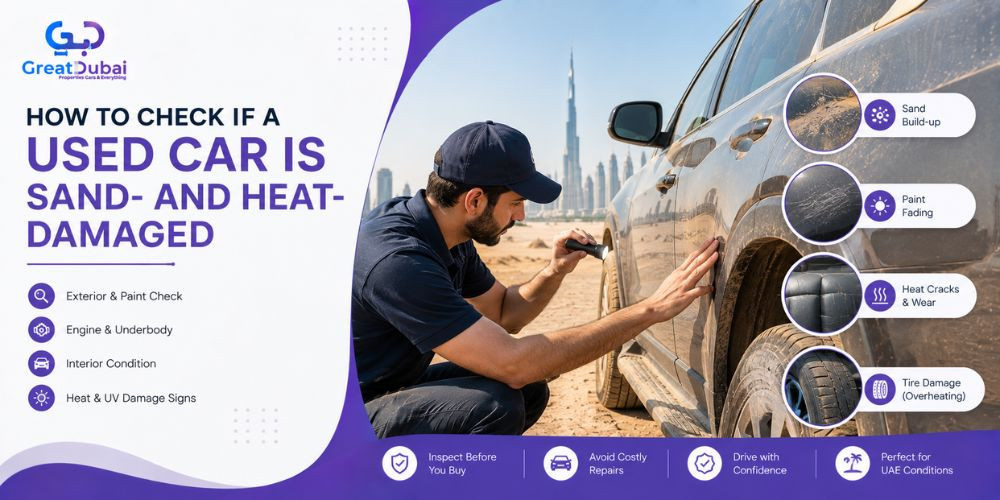
It's not just about looking into the mileage or accident history when purchasing a used car in Dubai; it's also about service records. Even if a vehicle is in top condition from the outside, the harsh conditions of Dubai can cause it to deteriorate faster than in other countries, due to the extreme heat, high levels of UV, desert dust, and sand.
Then, how do you know if a used car has suffered badly from the Dubai climate? Follow the inspection procedure before payment.
Why Sand and Heat Damage Matters in Dubai?
The environment in Dubai can have an impact on virtually all aspects of the vehicle.
-
High temperatures place additional stress on the engine cooling system, transmission, battery, and air conditioning.
-
Exposure to strong UV can cause paint to fade and cause rubber seals and dashboards to seep and crack.
-
Sand and dust can cause filters to become clogged, wear and contaminate mechanical components with paint.
The key factor is that damage from heat and sand cannot always be seen. A vehicle can start and be able to drive normally and require costly repairs shortly after being bought.
List of Things to Check for Damage
Examine the Paint for signs of Sun and Sand Damage
Work on the outside in daylight.
Key areas to check are the roof, bonnet and boot, and upper door surface as these areas are exposed to a lot of sun. Watch for:
-
Paint that has faded or chalked
-
Oxidized clear coat
-
Peeling paint or paint with blisters.
-
Fine sand pitting
-
A lack of uniformity in gloss between panels
-
Cracked plastic trim
The UAE used car inspection guidelines recommend checking for headlights that are cloudy, UV deterioration, as well as sand pitting and paint mismatches.
Check for Repainting Too
Owners sometimes repaint damaged panels to repair them from sand and heat damage.
Make comparisons in color and texture between adjacent panels. Look for overspray around rubber seals, windows, badges, and door edges. An additional piece of evidence of repainting may be obtained from a paint-thickness gauge.
Ensure the Air Conditioning is Properly Working
The lack of a good AC is not merely a comfort problem; it is a real problem in Dubai. It can prove to be a huge repair bill.
Do not evaluate the system after a 30-second test. Turn on the car and let the air conditioning run for a few minutes. Afterwards, drive it in slower traffic and faster traffic.
Check whether:
-
Air becomes cold quickly
-
Cooling is steady when idling
-
The vents allow good airflow
-
The compressor makes unusual noises
-
There is a musty smell
-
If fitted, rear vents cool correctly
Current Dubai AC buying guides advise thoroughly testing the performance of AC units before purchasing a used car as the UAE is hot.
Look Under the Bonnet for Heat Stress
Check the engine compartment after the engine has cooled. Inspect the coolant reservoir, hoses, belts, battery and exposed wiring. Check for broken hoses, coolant stains, rust, leaks and crumbling plastic parts.
This is especially crucial in the UAE as weaker cooling parts can prove to be more problematic during the especially hot summer season. According to a UAE inspection guide, battery life is typically reduced by extreme heat.
|
Component |
What to Check |
Heat/Sand Warning Sign |
|
Coolant system |
Level, condition and leaks |
Brown coolant, low level or residue |
|
Radiator |
Fins and visible leaks |
Heavy dust, blocked fins or damage |
|
Hoses |
Flexibility and condition |
Cracks, swelling or brittleness |
|
Battery |
Date and terminal condition |
Old battery, corrosion or weak starting |
|
Belts |
Surface and tension |
Cracks, glazing or fraying |
|
Engine bay |
Leaks and excessive dust |
Oil residue or suspicious cleaning |
Test the Battery's Age
A battery can be close to being dead and look just fine.
Check the battery manufacture/replacement date. Batteries do not last as long in extreme temperatures as they do in cooler areas. Properly considering the age of the batteries is often advised as a UAE buying guideline today due to the local climate.
Also check the terminals for corrosion.
Check Tyres for UV and heat damage
Never base the quality of tyres solely on tread thickness.
Inspect Sidewalls for:
-
Fine cracks
-
Bulges
-
Uneven wear
-
Rubber that is hard or crumbly
-
Old manufacturing dates
Even if tyres look good, they can wear out with age, UV exposure and heat. Compare both sets of four tyres. If wear is significantly different on one tyre, check if it's a problem with alignment or suspension.
Inspect Cabin for heat damage
Open the door and check the dashboard and seats, door panels and roof lining.
Look for:
-
Cracked dashboard surfaces
-
Faded upholstery
-
Removing the coating from leather or vinyl
-
Brittle buttons
-
Damaged door seals
-
Sagging headliner
-
Cracked steering-wheel surfaces
The interior should also be a match for the advertised mileage. If the steering wheel is worn, pedals and seats are worn, and the mileage is very low, that is an indication to investigate further.
Look for Sand and Dust in Hidden Areas
It is normal that there is a little bit of dust in Dubai. The worry is that it builds up in areas where it shouldn't be.
Inspect around the:
-
Engine bay
-
Air-intake area
-
Cabin air-filter housing
-
Door seals
-
Boot seals
-
Underbody
-
Suspension components
Don't assume a car with a lot of dust in the engine compartment is a bad car. But if the level of contamination is too high and there are no service records, it may suggest that the vehicle is poorly maintained.
Sand may also cause filters to become clogged and limit air movement, which will overwork the AC system.
Review Service History for Dubai-Climate Maintenance
Service history may give clues as to how the car was protected from climatic influences.
Look for evidence of regular:
-
Oil and filter changes
-
Cooling-system maintenance
-
AC servicing
-
Battery replacement
-
Tyre replacement
-
Service and repairs for transmission as needed
-
Manufacturer-recommended inspections
A car with good service history is easier to evaluate than one that is just part of the seller's statement, “Everything has been serviced.”
Check the Odometer with the invoices and dates of services. Gaps in the history should be questioned.
Review VIN and Accident History
Doing heat and sand checking should not be a substitute for the normal checks a used car undergoes.
Before paying, you should check the VIN/chassis number of the car. Verify the presence of any records of accidents or vehicles via suitable UAE channels.
The UAE chassis-damage guide provided by the company advises reviewing the VIN records before the actual inspection of the vehicle and also cautions that online records may not contain all private repair information or overseas records.
Take a Proper Test Drive
The test drive can uncover issues that aren't seen during an overview inspection.
Drive long enough to assess the performance of the car at various speeds. Pay attention to:
-
Steering behaviour
-
Engine temperature
-
AC performance
-
Gear changes
-
Brake response
-
Suspension noises
-
Vibrations
-
Warning lights
A significant increase in temperature reading or if the AC is weak in operation or idle, check the issue before driving.
Sand and Heat-Damage Red Flags
|
Inspection Area |
Normal Condition |
Red Flag |
|
Paint |
Consistent colour and gloss |
Heavy fading, oxidation or peeling |
|
Bonnet/Roof |
Minor surface wear |
Excessive sand pitting or clear-coat failure |
|
AC |
Strong, consistent cooling |
Weak cooling or compressor noise |
|
Battery |
Reasonable age and clean terminals |
Old battery or corrosion |
|
Tyres |
Even wear and healthy sidewalls |
Cracks, bulges or excessive age |
|
Dashboard |
Intact surface |
Cracking, warping or peeling |
|
Rubber seals |
Flexible and intact |
Brittle, cracked or loose |
|
Engine bay |
Normal dust level |
Heavy contamination plus poor maintenance |
|
Cooling system |
Correct level, no leaks |
Low coolant, residue or overheating |
|
Service history |
Regular documented maintenance |
Large gaps or no records |
When Should You Walk Away?
Situations can sometimes be negotiated due to some problems. Others should cause you to think twice about buying it.
Watch for overheating history, brittle tyres, badly damaged paint, extensive corrosion, poor accident repairs, AC issues, and unexplained electrical issues are all red flags to be aware of.
One of the most significant red flags can be the seller's actions. If the seller ignores a proper inspection, is not willing to give you the VIN, wants the payment right away, or dismisses any issues, you don't need to take the chance.
Final Verdict
The process of inspecting a used car in Dubai is not a simple one, which involves checking the paint and giving a short test drive.
Just because a car looks clean doesn't mean it is well maintained! The high temperature, the sun, dust, and sand in Dubai can cause damage that won't be apparent for months after you buy it off the shelf.
The easiest way to do this is to see what the car looks like, check the maintenance records, determine the future maintenance expenses, and only pay if the car passes a proper pre-purchase inspection.